WWPD
WWPD
WWPD
WWPD
WWPD
WWPD
WWPD
WWPD
WWPD

Friday, September 2, 2016

Waystone: Layers of Secrets (Part Two)

Introduction

This is the second part of my discussion of a custom setting for AMBER DRPG/Lords of Gossamer and Shadow. In this setting, new player characters are likely to slowly discover the secrets of the universe through play, as a series of nested secrets.  In the first part, we discussed the Marches (an inter-dimensional forest connecting different parallel realities) and the different ways to access it.

Essence

As the players characters explore Marches with Wayfaring, they will soon notice a gradient in the level of Essence along the paths.  In one direction, the paths become more "real" and the Realms that branch off them become larger and more stable.  In other directions, the level of reality drops.  This is because the Essence that underpins the universe flows out from its center, becoming more diffuse the farther it has traveled.  The flow of Essence is thus true north of the Marches -- closer to the Center lie the High Marches, farther away lie the Low Marches.  Wayfarers will find that there is a limit to how far they can travel in either direction.  If they travel too far into the Low Marches, even on Paths, they will begin to suffer the effects of Low Essence, gradually weakening and eventually dying.  If they travel too far into the High Marches, they will find High Essence equally discomforting and dangerous, before eventually coming to an uncross-able chasm lying across their path.

Wayfarers will also discover that the Essence is stronger along the paths than off the paths.  Those with a metaphysical bent may surmise that the paths themselves are the physical manifestation of these rivers of essence flowing through and underpinning the Marches.  The Waystones represent an even higher concentrations of Essence. The realm behind each one is a kind of a pinched-off balloon, and the universe therein depends on the higher local concentration of Essence.

Aspects

The flows of Essence are not identical.  Essence comes in different "flavors," known as Aspects.  Along Paths strongly marked with one Aspect or another Realms too reflect this Aspect.  Along a Path strong in Fire, the Realms may be filled with magma, or sheets of flame, or desert realms, for example.  These Realms are not _pure_ Fire.  Other Aspects are always mixed in, and even in the most strongly aspected locations, there is always a background level of mixed Essences.

Wayfarers themselves may find that that they are attuned more strongly to one Aspect or another.  Such characters should purchase levels of Aspect.  As they experiment with their affinity, they find that they can impost their will on the environment around them, imparting Aspect to their surroundings and causing reality to change.  This is more powerful and fundamental than mere Sorcery, since it taps into the fundamental nature of the universe.

Certain Realms, for whatever reason, act as nodes in the flow of Aspect.  Characters who spend their time in these areas may, by study and attunement, improve their connection to an Aspect.  Such Realms are thus valuable real estate for Wayfarers to possess, and are sometimes known as Thrones.


The Marcher Lords

Sooner or later, novice Wayfarers will encounter others of their kind.  The most powerful such beings call themselves Marcher Lords, and possess a common society (of sorts) and code of conduct.  These are the elder Amberites of the Waystone setting.  In my playtest, I populated their number by modifying the Gossamer Lords from the main rule book, but the GM can use any collection of sufficiently potent, irascible beings.


All Marcher Lords, at a minimum, are Waywalkers, and are, almost universally, superhumanly strong, tough, and magical.  Any Marcher Lord who encounters a player character with Amber-level attributes, Waywalking, Aspect and/or Sigil-crafting recognizes them as potential peer. Most Marcher Lords take such a candidate under their wing, instructing them, and building a web of obligations and debts early. Others may attempt to destroy the character before they can become a rival.

Any being may try to claim status as a Marcher Lord.  They must declare their candidacy to any existing Marcher Lord.  That Lord is then obliged to assemble a panel of at least three Lords (usually, but not always including himself) to test the candidate.  During this probationary period he must grant the candidate hospitality and truce.

The panel of Lords then sets a series of challenges for the candidate, with each Lord usually contributing one obstacle based on their specialty.  Customarily, the candidate must Waywalk from the lower marches to a designated Realm, without using a Sigil for transport.  Along the way, they may have to cross specific obstacles or defeat summoned creatures.  These challenges almost always require Amber-level rank in one or more attributes (or considerable cleverness) to overcome.

It is considered bad form for the panel of Lords to impose an obstacle that requires a much higher or lower Rank, and if they do, they may face informal censure from their peers.  The purpose of the test is to weed out the unworthy, not assassinate young Lords.  Sometimes however, the latter takes place under cover of the former, so a wise candidate will seek a friendly Lord to assemble the panel.

A candidate who survives the journey and reaches the designated Realm is considered to have passed, and are recognized as Marcher Lord.  Candidates who never arrive are considered to have failed.  Most Marcher Lords are tetchy and dislike having their time wasted, and it is considered more than acceptable to execute failed candidates.

Marcher Lords have an informal code of conduct regarding their peers.  They must accord another Lord a minimum of courtesy due their rank.  A Marcher Lord is expected to grant hospitality in his Realm to another Lord who requests it, and in return the guest Lord should respect the peace of his host's domain. Marcher Lords are expected not to slay other Lords out of hand, but to have a declared feud or reason for doing so.  Since Marcher Lords are connected by a web of favors, alliances, and blood relationships, there is an incentive to abide by these minimal norms, as well as an incentive for other Lords to censure a peer who violates them too often.

The main line of Marcher Lords are descended from the Sons of Bor. The majority of them come from acknowledged offspring who are given the test once their parents feel they are ready.  A few (like players characters) sometimes appear out of the Realms, never having met their parent Lord or Lady.  Marcher Lords are not very fertile, but they live practically forever and travel widely between Realms.  So they may have unknown offspring pretty much anywhere. A few Lords, however, insist that they are completely unrelated to the others. 


Thrones

The most powerful Marcher Lords are not simply powerful beings in their own right, but the owners of Thrones, where Aspect of one kind or another is concentrated.  Control of a Throne allows the Lord to develop a very high level of Aspect.  Only one being may be fully-attuned to a Throne at a time, and is considered its "occupant."

There is only one Major Throne for each Aspect, located in the High Marches at the point where essence flows across the Abyss into the moral real.  The owners of this Major Throne is considered the Prince and Lord of that aspect. Other, Minor Thrones exist here and there at nodal points.  These vary in stability and power, but can still be quite valuable real estate.

Marcher Lords feud, backstab and murder for control of Thrones major and minor.  The owners of the Major Thrones are the thirteen of the most powerful beings in existence. Almost all are heads of sprawling, related families of Marcher Lords, some of who may occupy Thrones Minor in their own right. 

 As each Throne Major has its own court, line of succession, rivals and claimants, Marcher Lord politics are almost endlessly complex, shifting, and dangerous.

Wednesday, August 3, 2016

2016 Space Marines

Finished my vow for the Bolter and Chainsword's yearly E Tenebra Lux painting contest.  Lots of devastators and drop pods.


Monday, July 4, 2016

Woot! My Novel is Released

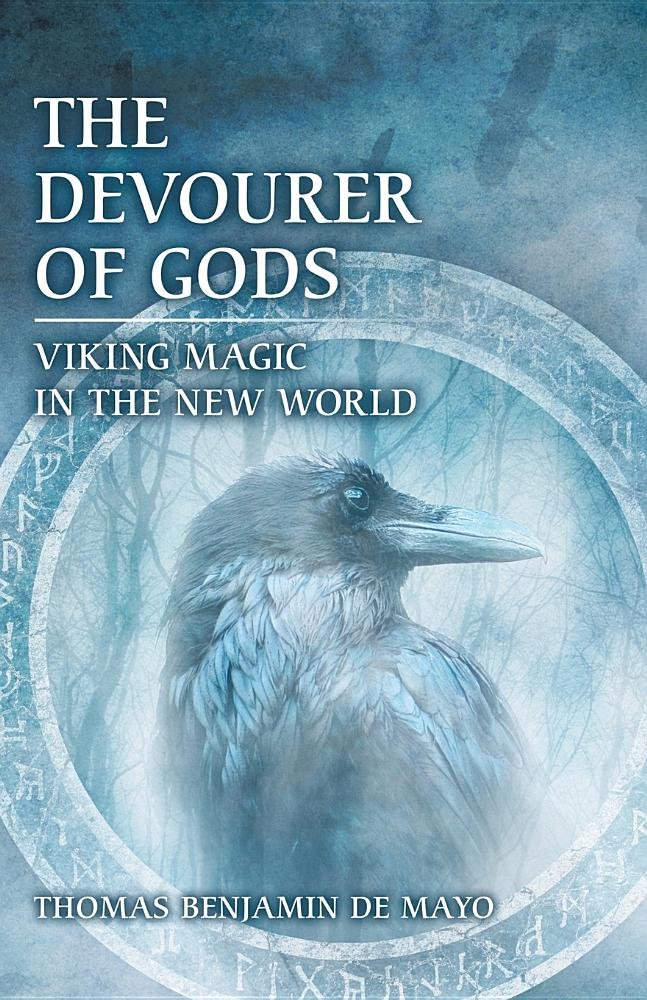
Woot!  My first novel, the Devourer of Gods is released and now on Amazon. Bagwyn Books let me know late last week.  I have yet to receive a physical copy, so it doesn't quite seem real to me yet.  Anyhoo, I started up a promotional site over at www.thedevourerofgods.com.


 THE DEVOURER OF GODS
An axe age, a sword age, a wind age, a wolf age. Shields shall be cloven…
Cover Image
Oooh.... Spiffy cover.
                The Devourer of Gods weaves the tapestry of an alternate Viking North America soaked in blood and magic. Pagans and Christians clash with ship and shield-wall, unaware of the supernatural menace that hungers for them. When his son departs on a doomed raid against the natives, the Norse chieftain Jörund must confront the seeress Gudhrun Grimswidow and the sorcerous allies he once betrayed. In the city of St Brendan, the Marklander  woman Maria-Abit finds conspiracy and mystery in the court of her king. Can they uncover and defeat the Devourer of Gods?

Buy it here.

Tuesday, April 19, 2016

40k Formations and Codex Supplement: Angels of Death


Image result for codex supplement angels of death cover


The latest Space Marine supplement, Angels of Death, is really, really cool.  It collects some previously-released Formations and adds a few more.  Notably, it has big Formation of Formations for each several 1st Founding Codex chapters.  Combined with the Formations in the base Codex, I now feel like a Space Marine army can be organized around different playstyles, and do so in a way that is fluffy and characterful. 

Ravenguard get lots of scouts, sneaky deployments and sudden assaults. White Scars get fast bikes.  Iron Hands can field a tank-heavy force. Salamanders get some more flame stuff (yawn).  My own Chapter's lineage, the Imperial Fists, receive a Formation that allows multiple devastator, centurion, and vindicator squads.

This is the book that is making me love Formations. My first reaction to Formations was pretty negative, but that was back when the core of army building was the CAD. 

It now seems to me that GW is using Formations as a way to reflect the character of the armies.  The new Formations of Formations are, in effect, new, customized (and customize-able) Force Organization charts. Not since the old 3.5 Chaos Dex, have I felt this much freedom to build a force the way I want and to have it reflected in the rules.

Can Formations be abused?  Are they unevenly designed?  Sure.  But so is 40k as a whole. More than ever, it is imperative for players to meet and agree on the type of game they wish to play.

Here's hoping GW creates formations in this much depth for every army, not just Space Marines...

Well, That Sucked!

You may have noticed I haven't posted in a while.  I was out due to medical issues, but I'm back now.  Look for more posts.

Tuesday, October 13, 2015

Waystone: Layers of Secrets (Part One)

First Secrets 

I have been running a game of Amber Diceless RPG/Lords of Gossamer and Shadow for our local group, using an alternate setting. Instead of Shadow and Pattern, or the Gossamer Stair, this universe is connected by a mysterious forest called the Marches. This series of columns will describe the Marches as a new player character would experience them, as a nested series of secrets, which the GM would reveal in play.  Along the way, I'll provide some design notes, anecdotes, and generally explain the setting as a whole.

 You're a (Demi)God 

Player characters may start they game completely ignorant of the world of the Marches.  They may have been lost or abandoned in a realm, and be completely unaware that others exists.  Like Corwin at the start of the Amber Chronicles, they have to discover the nature of the universe as they go.  This is a great way to introduce new players to the setting, through experimentation and discovery.

Their first discovery then, will be about themselves.  The PCs start out as Pargon-ranked in all their attributes (unless they sell them down).  That means that they are already psychic, super-strong, super-tough, and insanely athletic and deadly. If they've been alive for very long, they also know that they are effectively immortal.  If they've spent any points on powers, then they know that magic exists, too.

As in Amber, or in LoGaS, player characters may or may not know their parents.  One of these parents (at least) was probably a Marcher Lord.  If their Marcher Lord Daddy (or Mommy or Both) is present as they grow up, the parent probably vanishes from time to time.  They are almost certainly caught doing (or being) more than human or having more than one power.  Alternatively, the Marcher Lord parent may be long gone, a figure of mystery.  Either way, the child probably has questions.

 Other Worlds Exist

Either in play, or before play begins, the player character will learn that other worlds exist. The equivalent of an Amber Shadow or a Gossamer Domain is a Realm. A Realm is a self-contained universe.  It may appear infinite from inside (as ours does) or it may be as small as kingdom or even a broom-closet.  Some Realms have weird geometry; if you walk far enough you may end up back at the same point or maybe you can see distant lands hanging in the sky. The player character will likely rule their Realm, by virtue of their superhuman powers, or be raised by its ruler.

All Realms contain at least one Waystone.  Waystones appear rounded, slightly pock-marked bone-colored stone, usually ranging in size from a pebble to a car tire.  The bigger the realm, the larger the stone will likely appear.  Some Waystones are marked with mysterious runes (usually just one) or show signs of breakage or even scorch marks.  They may change slowly in size, appearance, or location over time.  Waystones have a number of different nicknames -- such as Wichstones, Milestones, Geomantic points.  The most common nickname, however, is "the bones of Ymr."

Player characters with Sorcery  can sense that these are magical objects, filled with energy.  Player characters with Aspect can tell that the stones are nexus points of essence, that they are somehow more "real" than the surrounding Realm.  Player characters with Wayfinding, of course, can sense the presence of the Marches beyond the stone, and have an innate sense of how to open a Way.

Some Realms are inhabited by creatures with Minor Wayfinding.  In these Realms traffic to and from the Marches may be common. In other Realms, they player characters will need to discover how the stones work for themselves, experimenting until they manage to open a Way.  (At which point, they must buy the power with points.)

Concentrating on a Waystone, and pouring a little energy into it, causes a Way to open.  A character with Minor Wayfinding or better need only stand near the stone and concentrate for a few minutes.  Opening a Way is slower than Sorcery,using an Icon. A disc-shaped hole appears in the air, revealing the Marches behind.  A character with Wayfinding proper soon finds that they need not make an opening at the stone itself, although its presence makes the process faster and easier.  They will also eventually find that they can make the Way larger or smaller or differently-shaped or colored or opaque, noisy or silent, glowing or subdued.


At this point, the player character will probably step through, into the Marches.  (And specifically, into the Middle Marches where most viable Realms are located.)  They will see a forest.  Depending on conditions, it may be a sparse forest, with scrubby undergrowth, or a lush forest with a canopy that blocks out the skies, or a pine taiga covered in drifting snows.  There may be clearings or burned areas, or boulders or whatever.  In some really odd places, the Marches may appear as desert or ocean or even empty space.  But for the most part the Marches are forest.

The player character will probably notice a Waystone, more or less matching the one on the others side, near the Way they just vacated.  Unless they concentrate on holding it open, or on snapping it shut, the Way will close about a minute after they exit.  Their home waystone is probably on a path, one that stretches off into the distance.  If they came from a large Realm, there may be a clearing or even some broken ruins.

The first-time traveler will feel cold, regardless of whether the sun is shining or the temperature of the air.  The attuned will realize that this is not true cold -- it is a lack of magical energy, of the essence of reality.  In their home Realm it was thick; here it is thin.  It is stronger on the path than off it.

The Marches slowly change. The same tree may not be in the same place if you look away. The type of vegetation may shift.  The sun and moon may move back and forth in the sky, or vanish suddenly.  The Marches are perilous.  Even if character do not travel far, the exposure to low Essence will begin to take a toll on them.  First they will shiver, then they will weaken, eventually they may begin to experience numbness in the extremities.  They can counteract this to some degree by staying on the paths or near Waystones.  If they leave the path, reality becomes unstable.  There may be areas of non-Euclidean geometry, where distances fold back in on themselves, or where a single stand of trees recedes forever.  The traveler may encounter strange beasts out of legend, or (perhaps more dangerous) other wanderers.

However, if the character follows the path they will eventually come upon another Waystone.  Should they concentrate, a Way will open, leading them to a new Realm.  The new Realm is a new universe, perhaps quite different than the one the player left.  Most Realms are wilderness, or inhabited by low-magic fantasy or Renaissance humans, but there are high-tech Realms or high-fantasy Realms too. 


Playtest

In my current game, players had the option of beginning clueless or clued-in.  Clueless characters had no Wayfinding, and knew only their Realm.  Some of them were Sorcerers and shapeshifters, quite powerful, but confined to the Realm of their birth. A few of the characters already had Wayfinding, and knew enough to wander around the Marches.  None of the characters (except one) had ever met their father, but some of them had magical mothers.  As the game opened, all the characters began to feel a call that drew them towards the nearest Waystone, and thus into the Marches.  This compulsion, whatever it was, also enabled the characters to open a Way, provided they experimented enough...

Next up: Aspects and Marcher Lords

Tuesday, September 15, 2015

Simplied Pointing?

I've been considering the way most games handle point costs. In most games, like 40k or FoW, the scale of a game is around 1500 points and up. A typical unit costs between 100 and 300 points, with 5 point increments, and every upgrade has a point cost.  But does the difference between, say a 155 point tank and a 175 point tank truly effect list design that much, particularly if the number of choices are already constrained by a force organization chart or other limiting mechanism? How would a greatly simplified point system affect play?  Would reducing the granularity of pointing increase or decrease min-maxing shenanigans? 

For example, consider the following simplified point scheme for a game like 40k or FoW:

Infantry
Pricing is for the first 5-10 models. Additional models would cost more points.

Crappy Infantry: 2 points.  A unit with truly awful morale, toughness, or weapon options. A unit more valuable for having wounds than for anything else.  Examples: FoW Reluctant Conscripts, 40k grots.  That sort of thing.  Upgrading the squad by 5-10 models would cost 1 point.

Normal Infantry:3 points. A unit with average morale and toughness. The price includes standard weapon options.  Examples:  FoW CT infantry with an LMG, mortar, and bazooka-equivalent, a 40k IG squad with a heavy and a special weapon, an Eldar Guardian squad with a heavy weapons platform, etc.  Upgrading the squad by 5-10 models would cost 1 point.

Elite Infantry: 4 points.  A unit with good morale and toughness.  The price includes standard weapon options.  Alternatively, a unit with average morale and toughness but good weapon options.  Examples: FoW CT infantry with multiple LMGs or AT options.  FoW CV or FT infantry with a single LMG and single AT weapon, etc. A 40k Tactical Marine Squad with a heavy and a special weapon. Upgrading the squad by 5-10 models would cost 1 point.

Super-Elite Infantry: 5 points. A unit with excellent morale, toughness, and weapon options.  Examples include FoW FV paratroopers, Sternguard, etc.  Upgrading the squad by 5-10 models would cost 1 point.

Tanks
Pricing is per tank or tank squadron (depending on game scale).

Armored Box: 1 point. The "tank" is lightly armored and has only a minimal weapon.  Examples: a 40k rhino.

Light Vehicle: 2 points. This vehicle is lightly armored by has a decent weapon system.  Examples: a FoW light tank with an HMG or small cannon, or a 40k Razorback or Landspeeder.

Average Vehicle: 3 points. A vehicle with decent armor and a good weapon system or two.  Examples: A FoW medium tank with AT10, a 40k Predator or Chimera.

Better Vehicle: 4 points. A vehicle with one outstanding feature, and the rest decent.  Examples, a FoW T-35/85. A 40k Leman Russ.

Superior Vehicle: 5 points. A vehicle superior in several respects and decent in only a few.  Examples: A FoW Tiger or Panther.

All the Trimmings
What about the little things on a unit, that make a small difference in game play, but might not be worth a whole point. I suggest that any or all such upgrades cost 1/2 a point.  Spend a point, getsome extras (from a choice) on any two units. So buying AtT for a Space Marine Tactical Squad would get you shooting or melee options on your sergeant.  Buying AtT for a Rhino would let you take a dozer blade, storm bolter, or hunter-killer missile.  Buying AtT for a rifle squad might get you an extra bazooka or MG.  The idea is to make the extras expensive enough that the player would hesitate, but without making the pricing super complicated.

Monday, August 17, 2015

Ancients: Leader Abilities

As part of my ongoing Ancients wargame project, I will now turn to generals and leaders.  I'd like my game to be mostly about commanding, bolstering and manipulating a battle-line of infantry units. I envision each leader in the players' army as having a set of abilities which can be activated with a successful roll. Different forces will have different abilities, representing national focus or training or style.

Each force will have a commanding leader, known as the Warlord.  Secondary leaders will be known as Commanders.  These are game mechanical terms, distinct from any historical titles or ranks. A leader model may move independently or it may join a unit. When joined to a unit, the leader is vulnerable to destruction if the unit takes hits or breaks, but often has a bigger effect of that unit through certain Abilities.

The following are draft lists of Abilities.  An army will typically chose two lists, buying abilities from each. They are in rough order of utility. The higher level abilities will often be reserved for the Warlord. Each will typically have two chosen Abilities. Additionally, all leaders will have access to a set of universal Abilities.

Only one Ability may be attempted by each leader each turn. 

Universal Abilities

Bolster Morale: Does not require a roll to activate.  Use when a Unit fails its Break Test.  If the leader is currently independent, and the Unit is within 6"of the leader, then that Unit may roll its Break Test using the Leader's Leadership score if it is higher. If the Leader has joined the Unit, you may reroll the Break Test using the Leader's Leadership score if it is higher, with a +1 bonus. If the Leader is your Warlord, use a +2 bonus instead.

Deployment Abilities
Deployment Abilities are activated at the end of the Deployment phase, and require a Leadership roll to activate. If both players have Leaders with Deployment abilities, roll off to see who activates an ability first.  (High roll may choose.) Then alternate until both players have finished activating all the Deployment abilities they wish.

Lateral Deployment Move: Select a friendly unit within 6" of the Leader.  That Unit may be placed in any valid location within the player's deployment zone within a Standard Move of its original location, with any ending facing.

Scouting Deployment Move:  Select a friendly unit within 6" of the Leader.  That Unit may immediately make a Standard Move inside or out of the Deployment Zone

Rear Deployment Swap: Select two adjacent friendly units within 12" of the Leader, one of which is in the rear arc of the other.  Swap the locations of these two units, retaining the same facing.

Lateral Deployment Swap: Select two adjacent friendly units within 12" of the Leader and in each other's side arcs.  Swap the locations of these two units, retaining the same facing.

Deployment Trickery: Select two friendly units anywhere within 24"of the Leader.  Swap the locations of these two units, with any facing.

Reserve Abilities:
A player declares if he will activate any Reserve Abilities at the start of his Deployment Phase.  When each ability is activated, the player must immediately declares which Unit he will place into which type of Reserve.  If both players have Leaders with Reserve abilities, roll off to see who activates an ability first.  (High roll may choose.) Then alternate until both players have finished activating all the Reserve abilities they wish.

Ambush Reserve: A Unit placed into Ambush Reserve remains in Reserve until the end of the Deployment Phase. The controlling player must place the Unit into a valid location in his Deployment zone. Doing so counts as activating a Deployment Ability.
 
Flank Reserve: A Unit placed into Ambush Reserve remains in Reserve until the controlling player Activates his Flank Reserves at the start of his Movement phase. This requires a Leadership roll from a Leader with the Flank Reserves Ability.  If the roll is successful, the Unit Moves immediately onto the table from any edge.


Lead from the Front Abilities

Genius for Murder:  Activate in any melee phase. Requires a Leadership roll to activate. If the Leader has joined a Unit, that Unit gains Advantage over one enemy Unit.  Lasts until the start of the activating player's next turn.

Retinue: Activate in any melee phase.  Does not require a roll to activate. If the Leader has joined a Unit, that Unit gains 3 extra attacks.  Lasts until the start of the activating player's next turn.

Heroic Resistance:  Activate in any melee phase. Requires a Leadership roll to activate. If the Leader has joined a Unit, that Unit may reroll failed Saves.  Lasts until the start of the activating player's next turn.

Rally:  Activate in any melee phase. Requires a Leadership roll to activate. If the Leader has joined a Unit, that Unit automatically passes all Break Tests until the end of the Turn.

Defensive Abilities

Testudo: Activate in any shooting phase. Requires a Leadership roll to activate. Select one friendly unit within 12" of the Leader.  That Unit may reroll failed Saves.  Lasts until the end of phase.

Change Facing:  Activate in any phase. Requires a Leadership roll to activate. Select one friendly unit within 12" of the Leader.  That Unit may rotate its facing in any direction.  If it is in contact with an enemy Unit, the enemy Unit remains stationary and strikes the new facing.

Flank Protection: Activate in any phase. Requires a Leadership roll to activate. Select one friendly unit within 12" of the Leader.  That Unit may count one of its flank or rear facings as "front" for determining Advantage and number of Attacks .  If it is in contact with an enemy Unit, the enemy Unit remains stationary and strikes the new facing. Lasts until the start of the activating player's next turn.

Immovable Mountain: Activate in any phase. Requires a Leadership roll to activate. Select one friendly unit within 12" of the Leader.  That Unit counts all its flank and rear facings as "front" for determining Advantage and number of Attacks .  It may not move in its subsequent Movement phase. If it is in contact with an enemy Unit, the enemy Unit remains stationary and strikes the new facing. Lasts until the start of the activating player's next turn.

Narrow Frontage: Activate in any Melee phase. Requires a Leadership roll to activate. Select one friendly unit within 12" of the Leader that is engaged with multiple enemies to its front.  One of those enemy Units (opposing player's choice) does not contribute any Attacks in Melee. Lasts until the start of the activating player's next turn.

Offensive Abilities

Push: Activate in any Melee phase. Requires a Leadership roll to activate. Select one unit within 12" of the Leader that is engaged with a single enemy Unit to its front. If successful, push both Units directly backwards by one standard Move.  Use the lowest Move value of the two Units involved.

Berserkergang: Activate in any Melee phase. Requires a Leadership roll to activate. Select one friendly unit within 12" of the Leader.  The selected Unit may reroll failed to-Hit rolls in Combat, but must also reroll successful Saves.Lasts until the start of the activating player's next turn. 

Rain of Arrows: Activate in the controlling player's Shooting phase. Requires a Leadership roll to activate. Select one friendly unit within 12" of the Leader.  The selected unit may reroll failed to-Hit rolls.  Lasts until the end of Phase.


Support Abilities

Bolster the Line:  Activate whenever a friendly Unit is destroyed within 12" of the Leader.  Requires a roll to Activate  Select any other unengaged Unit within 6" of the destroyed Unit and on its flanks.  Replace the destroyed Unit with the selected Unit.
 
Shorten the Line: Activate whenever a friendly Unit is destroyed within 12" of the Leader.  Requires a roll to Activate  Select any other unengaged Unit within 6" of the destroyed Unit and in its rear arc.  Replace the destroyed Unit with the selected Unit.
 
Rest and Refit:  Activate whenever a friendly Unit suffers hits within 12" of the Leader.  Requires a roll to Activate  Select any other unengaged Unit within 6" of the destroyed Unit and in its rear arc.  Swap the two Units.

Strengthen:  Activate in any Melee phase.  Requires a roll to Activate. Select a friendly unengaged Unit within 12" of the Leader, and in the rear arc and within 6"  of a unit engaged in Melee, it may contribute half its dice to the other Unit's combat. Lasts until the start of the activating player's next turn. 


Monday, July 27, 2015

Thoughts on the Age of Sigmar Background

Having read the new Warhammer: Age of Sigmar book, here are some thoughts on the background for the new world, how it differs from the old Warhammer world, what it means for the game design, and what I think it means for the game's future.

First of all, I'm pleased to say it still feels very Warhammery.  There are plenty of hold-over characters and references.  Several of the old characters become gods:  Sigmar, Teclis, Tyrion, Nagash...

Chaos remains Chaos: Nurgle, Tzeench, and Khorne are all basically the same.  The models and art are evocative of the long-developed Chaos look and feel.  Slaanesh is present too, but the fluff says s/he is now a prisoner.  Fan paranoia thinks GW may be writing Slaanesh out of the background to be more child friendly.  I am not yet sure.  I think there may be a battle for Slaanesh in some future campaign.  (Besides, what sort of S&M god would Slaanesh be, if he didn't like to be tied up from time to time.) The Horned Rat gets promoted to be a minor Chaos God.

Orks look pretty much the same, but don't get many photos.

Ogres look pretty much the same, and feature in lots of photos.  I predict minimal changes to the Ogre model range.

The undead have lots of Nagash stuff from the endtimes, and seem to be using the Vampire Counts skeletons.  I predict a loss of Transylvanian and Egyptian elements, in favor of some new look.

Interestingly, the Lizardmen are all over the place in the photos, with lots of giant dinosaurs.  They are renamed, but I think that far from being written out of the new universe, the Lizardmen will remain with minimal changes to the model range.  There are just too many cool dinosaur models.

The Skaven play a major role in the background.  If anything, the Skaven have gotten even more emphasis than in WFB.

The wood elf tree spirits have an army in the main book, minus all the elf elements.

Dwarves are mentioned as existing, but get one picture -- of a Slayer.

The Elves are just gone.  Wood Elves, High Elves, Dark Elves. Gone.  There are elf gods, but they are all sad that their people have vanished, except for a few survivors that hang out with Sigmar.

The Empire is gone, gone, gone.  Bretonnia is gone, gone, gone. No more Renaissance Germany.  No more King Arthur.  Boo hoo.

The world is more open.  There are now nine realms, seven of which are contested battlefield.  Each corresponds roughly to an old Wind of Magic (except for the Chaos Realm itself).  Each of these mortal realms is made up of (apparently) many sub-dimensions, pocket worlds, and so forth.  So there is no D&D campaign map of the world any more, only of particular battlefields, and you are free to invent your own.  I think this is a major change, and it gives GW space to grow and develop this new world.

The Stormcast Eternals are magic Space Marines (more or less) who descend from the Heavens on drop pods... I mean lightning bolts and smash things.  Actually, I think they are quite interesting.  With the Stormcast Eternals, GW is reversing the usual background.  Instead of Chaos corrupting and destroying a decaying world, we have (essentially) a fantasy version of the Emperor's Great Crusade.  Order is on the offensive, liberating worlds and bringing hope.

Overall, I think the emphasis will be on smaller numbers of bigger, more interesting models.  The existing factions are simplified into 4 big factions: Order, Chaos, Destruction, and Death.  So all the good guys into Order, Chaos remains Chaos plus it's got the Skaven, Orcs and Ogres hang out together, and then there are some undead.

My guess is that we will soon see a repackaging and rerelease of many of the old models.  I strongly suspect that GW will keep the newer kits, the ones that are more atmospheric, and larger or more dynamic.  I think older models, models based on real history, and so forth will be phased out.  The biggest losers, I think will be the good guys (and the dark elves).  The two human factions, Empire and Bretonnia, look to me to be gone for good. There doesn't seem to be any good place for their historical armies.  Most of the elf and dwarf stuff seems too low-fantasy, and just generic.  Maybe some of the bigger or newer kits like Lion Chariots, Dragons, or War Altars will survive.

Heck, maybe none of them will, ultimately.  I'm merely guessing when I suggest some older models will be repackaged with new (IP protected) names and round bases.  And all of this is dependent on Age of Sigmar surviving long enough for GW to put into action whatever long-term plans it has.

Given the horrible new rules, I'm not sure that's a safe bet.

But overall, I do like the new world.


Pointlessness

Why my posts have become less frequent lately.
So Warhammer: Age of Sigmar is out, and it has no point values, and the old time WFB players are
pretty upset.

Lots of wargames, particularly historical games, have no points, relying on either a game master or a player to set up the armies and the victory conditions for each scenario.  Such games can be quite satisfying, and are often a convention staple.

Moreover, point systems are quite often flawed. Listen to wargamers complain, and it's almost never about rules or rules systems, it is about army lists and unit points.  Are they too high?  Are they too low?  Are the overpowered?  Does this unit "suck"?  More often than not, it's the point value of the unit that we complain about, not underlying the rules representation.  

When I design games, the point values give me more anxiety and heartache than any other factor in the game.  They are the hardest to tell if I've gotten them right, whether the balance is there or not.

Why not just take Sigmar's hammer to points, and obliterate them altogether? What purpose do points serve?  What is the point of points?

It seems to me that points serve several purposes in wargames, which are quite useful:

1) Points are a social convenience.  Any two players who are familiar with a game can throw down a scenario, choosing roughly evenly matched forces.  But it takes time, and coordination.  The players need to meet, agree, negotiate, and design.  It's work.  Points make it possible to have pick-up games.  Make a list at point value X, show up at the store, and play your opponent's X point list.  You don't need to know your opponent, or his army, or ever have met him before. Moreover, a list gives a certainty that you can find an opponent.  I can safely buy and paint model X, and I will always find an opponent, as long as my list is "legal."

2) List design is creative. People like making lists. Johny likes lists because he can play with themes and units.  Spike likes lists because he can hunt for a competitive advantage. It's fun to tinker and customize.  Codices and army books suggest army designs.  "I'd like to do a 1939 tank army."  "I'd like to make a drop pod army."  "Hey, did you see you can make a list of nothing but cavalry? With a train, too?"

These positive factors often outweigh the negatives of a pointed game, and all the crazy balance problems they bring.

I don't know if Age of Sigmar is going to fly or flop.  (My money is on flop.)  But without points, it's departing radically from the features


Tuesday, June 30, 2015

40k Formations and Flames of War Briefings


https://blogger.googleusercontent.com/img/b/R29vZ2xl/AVvXsEiUBfRCSYIEFPIOd_4ee3rxqK_B7ukUzBlhdwFha7A3iHXwLrUV5rLXapEGvAGYeFsLsuwvk_cOekqV7e4gw9JV8qPf4J25yZ_I6c8cBl82YF56qJ7GBpvdRdrQ_kIVmoKiNGsvxtUnQMpU/s1600/fo.jpg
The venerable 3rd edition Force Org chart.
Seventh Edition Warhammer 40k has been moving away from its standard Force Organization chart.  You may remember this venerable method of organizing armies, introduced way back at the start of 3rd edition, it consists of 1-2 HQ, 2-6 Troops, 0-3 Elites, 0-3 Fast Attack and 0-3 Heavy Support.  In essence, it usually represents a smallish infantry company, with a core of foot troops backed by some heavier vehicles or transports -- although over the years it has also been shaped to allow players other, more unusual types of "armies."

As a system of selection, it is both quite permissive -- allowing a players to pick freely from these slots -- but also restrictive in the overall types of forces permitted.  So you could make a ludicrous force of ten scouts and six Dreadnaughts, you could.  But Imperial Guard players who wanted to make a Tank Company or Space Marine players who wanted to make a Reserve Company Devastator force, found these impossible -- unless GW deigned to make a fudge to cover their specific force.


A typical FoW briefing.
Compare this to Flames of War's approach to army "briefings." FoW separates a force's nationality from its Company type.  So you could have a British Infantry force, a Mechanized force, or a Tank force, each with different Core and Support options and ratings.  A unit that might be Core of a tank company (like a tank platoon) might be the support of an Infantry company, and vice versa.  There could be further diversity by representing different types of tank or infantry companies, from different periods of the war, theaters, or parent organizations.


Flames of War's approach has led to hundreds of lists, many simulating specific historical units which existed for only very short periods of time.  This approach is more open than 40k's -- allowing for a huge variety of company types -- but perhaps too dependent on the constant release of new briefings.

A 40k Formation.
40k, however, has begun to try something new: Formations and Detachments.  Starting in 6th edition, it released an "Allied Detachment," which was a cut-down Force-Org chart allowing you to field allies.  They also began releasing Formation - which allowed you to take groups of models outside of the normal Force Org chart, provided you took them in the specified numbers and with the specified upgrades.  In return, you got a small rules bonus for the models in the Formation.


7th edition has exploded its use of Formations and Detachments enormously.  The old Force Org chart has been renamed the Combined Arms Detachment, which can be combined freely with other Formations, Detachments, and even individual loose units (in what is is known as a "Unbound List.")  Moreover, the last few Codices have been releasing Formations of Formations, in which different Formations are combined.  Many of these Formations are drawn from 40k's extensive background.  The Space Marines now have a Demi-Company, which can be doubled into Battle Company, a Scout group, a First Company strike force, and so forth.
https://blogger.googleusercontent.com/img/b/R29vZ2xl/AVvXsEhDE2U33oYK4Xfq1mdIJj_mdj8ttoIcL4xz8k-1_svO7aIIKh30ITezuTrDax_YWXW8-2CJieGzVsNEw1AIZaXhgKT5BHKpdIjZ0y203TF5vz0yyp4ZdY_PPUPV7eHgM8657ajxuhS0Elmn/s1600/Gladius+Strike+Force+Pg+1.png
A 40k Formation of Formations


As a person who likes to fiddle with games design, I'm struck by how much these new Formations are coming to resemble Flames of War's myriad company briefings.  Now a variety of force organizations from 40k's universe are beginning to see in-game representations.

Friday, June 12, 2015

Thinking About Amber DRPG

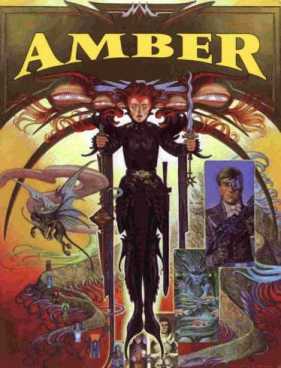
Amber DRPG.jpgThe Amber Diceless RPG has been one of my favorite games for years. Recently I've been trying out its successor game, Lords of Gossamer and Shadow, with my local RPG group.  As part of designing the campaign, I've been thinking about what makes a good Amber game work.  (When it works; sometimes it doesn't.)

1) Deep Character Investment: I've found that players often develop a deeper investment in their Amber characters than they do in characters from other games.  The system encourages you to think deeply about the characters' background, their upbringing, and their goals and wants. But, more than that, the very simplicity of the system encourages deep characterization.  Amber characters have only four stats, and maybe one or two of a handful of powers, but players are encouraged to visualize everything about them, from what they are wearing, to the worlds they visit, and have almost no limitations in inventing these details.

2) Infinite Setting: The characters can go anywhere, and do just about anything they wish. It is extremely common for Amber groups to separate, pursuing different goals, in entirely different worlds.

3) The Ties that Bind:  Despite the open setting, Amber characters are always drawn back to each other and to the important NPCs.  Most player groups quickly obtain a full set of Trumps, permitting them to call each other and teleport to each others' locations. So a widely scattered group can almost always reform for a plot point.  Amberites are also all family.  The important NPCs have similar powers, are usually blood relations.  Player characters cannot help but be pulled into the plotting and adventures of other Amberites.

I'm not sure how this will play with my current group, but I hope they will have a good session.

Wednesday, May 27, 2015

Layers, Donkey

Yesterday, I played a small 40k game against a beginner, at 1000 points, and only one vehicle. It reminded me of the early days of 3rd edition when I started playing, when people used fewer transports.

It made me realize that old 40k is still there in modern 40k, layered deep in the rules.  As 40k has grown, it has developed some quirky rules redundancies.

Consider, for example, how 40k handles multi-wound characters.  Characters have multiple wounds to save them from small arms and to seem more heroic. But there's always been a need to make them vulnerable to really powerful weapons. 

Back in 2nd edition, big guns like lascannons did d3 or d6 wounds to multiwound characters.  Then, in the 3rd edition reboot, the designers simplified things by removing this extra dice roll and replacing it with Instant Death, a rule that stated when S doubled T, it removed the model no matter how many wounds it had.  Simple, easy.

It wasn't too long, though, before they introduced a Salamanter mantle -- wargear that prevented instant death.  Items granting immunity proliferated, and eventually became standardized with the special rule Eternal Warrior.  By 5th or 6th edition, most competitive character builds were immune Instant Death, one way or the other.

There was already a solution, of sorts, though.  Apocalypse had introduced D-weapons, which in their original rules just killed everything, with no save, no invulnerable save, and no nothing.  It was a great rule when playing 5000 or 10,000 points a side.

7th edition ported D-weapons into the main game, but made them less deadly. They now only kill things super-dead on a 6. On a 2-5, they do D3 wounds. 

So now, 40k has two mechanics for multiple wound models.  There's the old Instant Death, which is trumped by Eternal Warrior, and then on top of that there's the D mechanic, which trumps Instant Death.

Monday, May 11, 2015

Waystone


Waystone
A setting for Amber Diceless RPG/Lords of Gossamer and Shadow

The Setting
A vast wilderness known as the Marches stretches across existence.  In its depths, reality goes thin, travelers who leave its paths vanish, and malformed things walk. Scattered within the Marches, there exist enclaves of stability and order. The peoples of these realms, the diverse descendants of a long-vanished empire, live in scattered freeholds and petty-kingdoms, defending their precarious lands with rapier and pike, musket and arquebus. Among them are those born to greater power, in whom the Essence flows strongly.  These gentry travel the Marches where others cannot tread, masters of spell, of blade, and of reality itself. 

Game Mechanics
This is a diceless game, inspired by Eric Wujick’s Amber Diceless Roleplaying, and its descendant Lords of Gossamer and Shadow. 

Character Creation
Points
Everybody starts with 100 points to build their character.  Any leftover points become Good Luck for your character.  If you go over 100 points, your character gains Bad Luck.

Races
In ancient days, the fourteen Archons bred mortals into a variety of castes for their empire.  Most inhabitants of the realms are humans, the descendants of the hardy and populous worker caste.  Others may be “elves,” “dwarves,” “orcs,” “trolls,” and others: the descendants of the administrators, builders, soldiers and heavy laborer castes.  There are also races and beings touched by the wild forces of the Marches – the beastmen and monsters – who are rarely welcome within the stable realms.
You can be any type of race you wish, or invent your own.  If it has a special power, such as night vision or regeneration, you may need to pay points for it.

Attributes
You start with 0 points in each Attribute. An Attribute of 0 is human-average. You spend points to improve. If you spend at least 10 points you are considered to be supernaturally-potent in that Attribute.  You may also sell down your Attribute.  At -10 or below, you are considered completely enfeebled in that Attribute.

·         Will: Used for Mind-to-Mind combat, and for powering magic. At higher levels, it allows you telepathic insight into people you meet.
·         Strength: Covers hand-to-hand fighting and feats of strength.  At higher levels, you become supernaturally strong.
·         Endurance: Allows you to resist adversity and to recover from injury.  At higher levels it allows you to regenerate.
·         Knowledge: Represents your education and life knowledge.  At higher levels, you may intuit information directly.
·         Charisma:  Represents your social skills, and is used for social combat.  At higher levels, you become supernaturally inspiring.
·         Melee:  Your skill in using hand weapons in combat.  At higher levels, you become supernaturally agile and skilled.
·         Ranged: Your skill in using ranged weapons in combat.  At higher levels, you become supernaturally agile and skilled.
For each of your Attributes, you may pick one Specialty, which must be a fairly narrow subset of the Attribute.  (For example, your Knowledge Speciality might be Biology.  Your Melee Speciality might be 2-handed swords.)  When you are using your Speciality, you gain a +5 bonus to your Attribute.

Powers
You may use your points to purchase Powers.  Powers come in different levels: Minor, Basic, Advanced, and maybe beyond. Advanced levels are not available at start.
Magic: Magic reflects your attunement to one of eleven Domains.  (Or a Domain of your own creation.) Each Domain is purchased separately.
·         Minor Magic [5 points] allows you to create Minor effects with your domain.  (A spark for fire, for example.  Or a glow for Light.)  Each Minor effect requires a spell slot. Y
·         Basic Magic [10 points] allows you to create larger effects with your domain, and to weaponize them as melee or ranged attacks.  (A firebolt for fire, for example.  Or a blinding burst for Light.)  Each Basic effect requires a spell slot.  You are now sufficiently skilled that you can cast Minor effects at will.
You have six prepared spell “slots.”  You may cast prepared spells at will.  Spells may combine different Domains. You may swap out and prepare new spells as a short ritual. You may purchase more “slots” at 1 point each.
You may also use a long ritual (several hours or days) to prepare an effect at one level above your own. 
The standard Domains are: Fire, Air, Earth, Water, Light, Dark, Cold, Beasts, Healing, Mind, Death.
Sigil-Crafting: Sigils are specialized personal Waystones which you can use to communicate and (at higher levels) travel instantaneously.
·         Minor Sigil-Crafting [10 points]: You may craft a Minor Sigil.  A Minor Sigil allows communication with any other linked Sigil or Waystone.  You can sense nearby Sigils.
·         Basic Sigil-Crafting [25 points]: You may craft a Basic Sigil.  A Basic Sigil allows communication and travel between with any other linked Sigils or Waystones.
Shapeshifting: Shapeshifting allows you to change shape.
·         Minor Shapeshifting [10 points] allows you to change into one alternate form via a short ritual.
·         Basic Shapeshifting [25 points] allows you to change into your preferred alternate form at will, and prepare up to six other forms into which you can change after a short ritual. A long ritual will allow you to swap out and prepare new forms.
Wayfinding: Wayfinding offers control over the Ways and Waystones that enable travel into and out of Realms and through the Marches.
·         Minor Wayfinding [10 points] allows you to sense the presence of nearby Waystones, and to use existing Waystones to open gates into and out of Realms
·         Basic Wayfinding [25 points] allows you to enhance or degrade the effects of a Waystone, to open gates into and out of Realms without a Waystone, to create temporary Paths, and to survive for longer in low-Essence portions of the Marches.
Connections
You may purchase a Connection to one of several organizations.  At the Associate level [5 points], you have contacts in the organization, but are not a member.  At the Member level [10 points], you are considered a member of that organization.  Here are some organizations:
·         The Church worships the seven loyal Archons who ruled the old Empire.  The fear the influence of Wild creatures and the Shadow Vessels.
·         The Freefolk venerate the five “traitor” Archons who destroyed the old Empire in the name of mortal freedom.  They have good relations with many Wild creatures.
·         The Magi are a mutual-supporting group of those who wield magic. There is a college for each Domain, and for the arts of Sigil-Crafting and Wayfinding.
·         The Second Empire is a feudal network of many realms.  It attempts to revive the old Empire.
·         The Warders watch over the Marches and Realms, and try to troubleshoot incursions from the Wild and the Shadow.

Toybox
You may purchase retainers, animal companions, magical items, and even entire Realms.  Minor items are 5 points, Basic items are 10, Advanced items are 15.  Work with the GM in designing your toybox.
You may have whatever mundane items you wish, provided they fit on your person or in a small dwelling, subject to GM approval.